
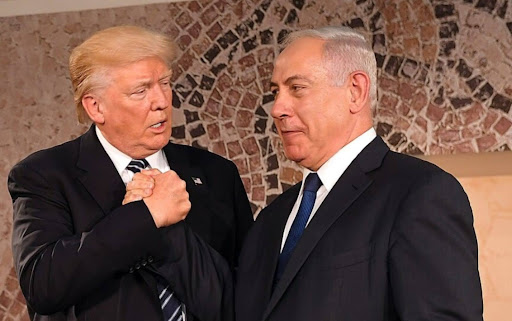
Two public performances — US President Donald Trump speaking on Fox News Radio and Israeli Prime Minister Benjamin Netanyahu addressing the world from Jerusalem — told dramatically different stories about the same conflict in the same week. Trump described an Iranian uprising as “a very big hurdle” and expressed skepticism about its feasibility, signaling a narrowing of American ambition and a retreat from regime-change language. Netanyahu spoke of shared purpose, of decades-long warnings vindicated, and of a war being fought for the future of the region. The contrast was vivid and consequential.
Trump’s Fox News comments were the more revealing of the two. Asked whether he supported Netanyahu’s calls for Iranians to rise up against their government, he was unusually candid in his doubt. People without weapons, he said, face a very big hurdle in attempting to overthrow a government. The implication was clear: regime change through popular uprising is not a realistic objective that American strategy should be built around. The comment signaled a president recalibrating in real time, adjusting his public position to match his private assessment of what is actually achievable.
Netanyahu’s Jerusalem speech operated on a different register entirely. He invoked the past — four decades of warnings about Iran — to justify the present, and he framed the current campaign as a historic opportunity that the world had been waiting for. His language was expansive, principled, and forward-looking in ways that made no concession to the more modest horizons Trump was sketching on Fox News. The two performances, taken together, illustrated the depth of the strategic divergence that Director of National Intelligence Tulsi Gabbard had confirmed before Congress.
The gap between Trump’s Fox News realism and Netanyahu’s Jerusalem ambition is not just rhetorical — it reflects genuinely different assessments of what the war can achieve and what it is for. Trump is governing a conflict he wants to end successfully on defined terms. Netanyahu is pursuing a generational project that he has no interest in ending prematurely.
Managing the narrative gap between these two performances — and the strategic divergence they reflect — is one of the ongoing challenges of an alliance that speaks publicly in two very different voices about the same war.