
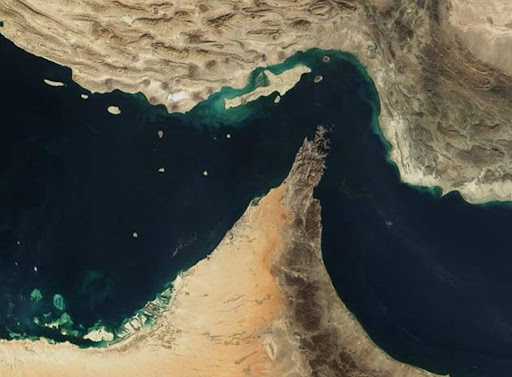
French President Emmanuel Macron’s vision of a “purely defensive” escort mission for the Strait of Hormuz — involving European and non-European nations and explicitly conditioned on a reduction in fighting intensity — neatly encapsulates Europe’s broader posture toward the crisis: willing to act in principle, but not yet, and not without conditions. Macron described the plan as a purely escort mission and said preparations were underway with multiple partners, but his defence minister simultaneously ruled out any immediate warship deployment while the conflict continued to escalate. The conditional nature of Macron’s plan reflects the fundamental difficulty of acting militarily during an active war.
Iran’s blockade of the strait has generated the most severe oil supply disruption in history and is inflicting significant economic pain on European consumers and businesses through higher energy prices. Tehran has attacked sixteen tankers since the conflict began in late February, declared tankers bound for American or allied ports to be legitimate military targets, and threatened to mine the waterway. The active conflict environment that makes Macron’s escort mission conditional is not showing any signs of de-escalation — making the timeline for any French naval participation deeply uncertain.
The UK’s position parallels France’s in its combination of expressed willingness and lack of concrete commitment. UK Energy Secretary Ed Miliband said any option capable of helping to reopen the strait was being examined, with mine-hunting drones mentioned specifically. The UK Ministry of Defence confirmed discussions with allies about a range of options. But like France, the UK has stopped short of pledging warships while Iran’s threats against vessels in the strait remain active and credible. The two closest European allies of the United States are thus aligned in their posture of conditional engagement — willing to participate eventually, but not now.
Germany’s scepticism about the EU’s Aspides mission adds another complication to Europe’s already hesitant response. Foreign Minister Johann Wadephul called the mission ineffective and doubted that expanding it to cover the Persian Gulf would provide meaningful security improvements. With the two largest EU military powers — France and Germany — effectively taking positions that preclude near-term naval involvement, the EU’s collective response to the crisis looks unlikely to materialise before a significant change in the conflict environment.
China’s diplomatic path may ultimately prove more practically effective than Macron’s conditional military plan. Beijing is reportedly in discussions with Tehran about allowing tankers to pass safely, offering a pathway to partial relief without requiring the reduction in hostilities that Macron and others have made their precondition for action. The Chinese embassy confirmed China’s commitment to constructive regional communication and de-escalation. US Energy Secretary Chris Wright expressed hope that China would be a constructive partner, suggesting that Washington sees diplomacy as the most viable near-term mechanism for improving conditions in the strait.