
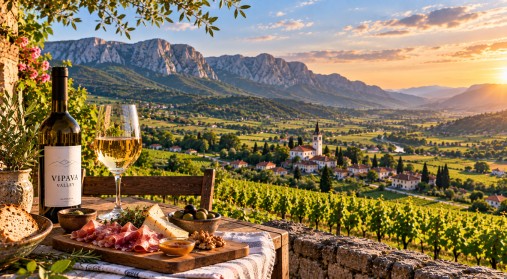
In Slovenia’s southwest, the enchanting Vipava Valley offers a tranquil escape characterized by its vineyards, mountainous landscapes, and rich agricultural heritage. Situated an hour from Ljubljana and close to the Italian border, the valley’s picturesque scenery is shaped by the Vipava River, expansive agricultural plains, and steep, vineyard-clad karst hills.
The region owes much of its unique environment to the burja, a formidable seasonal wind from the Alpine region, which, alongside dry conditions and karst soil, has fostered a distinct farming and winemaking culture. At the heart of the local economy and tourism, vineyards blanket the valley’s slopes, with small wineries and estates inviting exploration of regional wine varieties and traditional production techniques.
Culinary offerings further enhance Vipava Valley’s allure. The local cuisine features a delectable array of mature cheeses, fresh goat and sheep products, cured meats, and vegetables, all rooted in traditional Slovenian recipes. Diners can savor these local flavors at restaurants and farm-based eateries that prioritize homegrown ingredients.
The valley’s charm is also reflected in its villages, where historic farmhouses and rural properties are being revitalized into accommodations, thereby preserving traditional architecture and bolstering tourism. Cycling routes weave through vineyards and villages, while walking trails venture into the surrounding hills, offering myriad opportunities for outdoor recreation, including paragliding.
History buffs can delve into the Roman past of Ajdovščina and wander the historic lanes of Vipavski Križ. Meanwhile, the area around Nova Gorica provides a gateway to the unique cultural landscape shaped by the Slovenian-Italian border. As Vipava Valley develops, it maintains its rural essence by embracing small-scale accommodations, farms, and local businesses, positioning itself as an emerging destination for travelers seeking a serene alternative to Slovenia’s more frequented tourist spots.